
spiders
Protect your home or business from spiders in Central Texas by learning about their habits, species identification and more.

Schedule An Inspection!
Click To Contact

Spiders in Central Texas: Identification, Behavior, and What to Watch For
Spiders are one of the most commonly encountered pests in central Texas homes, yards, and outbuildings. While most species are harmless and actually help reduce insect populations, a handful pose real risks to people. Knowing which species are present in the Austin and San Antonio area, what signs to look for, and how to respond is the foundation of keeping your home and family safe.
What Are Spiders?
Spiders are arachnids, not insects. They have eight legs, two body segments (the cephalothorax and abdomen), and most have eight eyes – though their eyesight is generally poor. They range in size from barely visible at under 0.1 inches to over 3 inches in leg span for larger species like tarantulas.
Females are typically larger than males across most species. Coloration varies widely: black, brown, gray, yellow, and green are all common, and many species carry distinctive markings that aid identification. According to spider and arachnid resources from Texas A&M AgriLife Extension, Texas ranks among the top states in the country for total spider species diversity, with well over 900 documented species statewide.
Spiders Common to Central Texas
The Austin and San Antonio region sits in a zone where Hill Country, Blackland Prairie, and Edwards Plateau habitats overlap. This biodiversity supports a wide range of spider species. The two that demand the most attention from a safety standpoint are the black widow and the brown recluse.
Black Widow
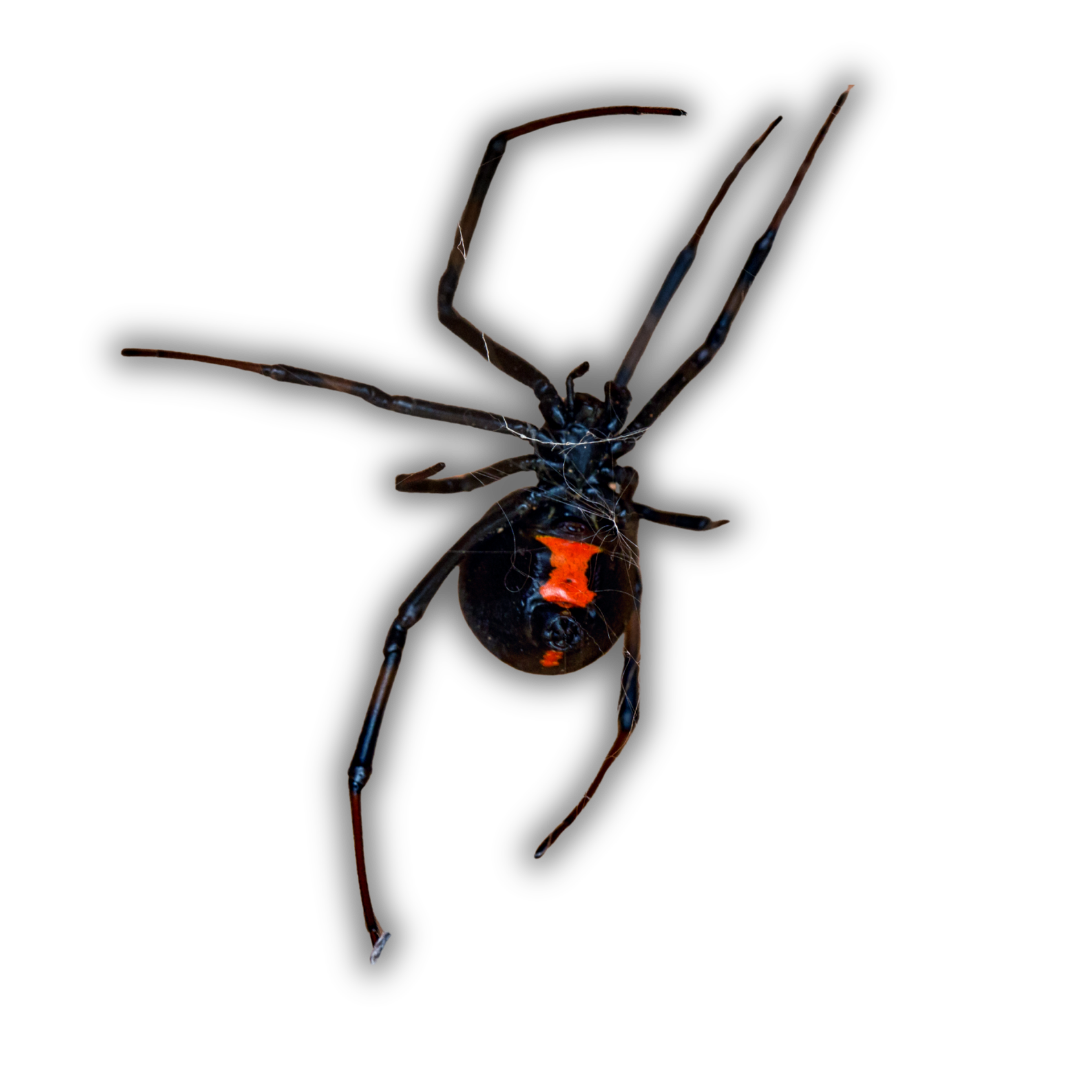
Black widows belong to the genus Latrodectus and are well established throughout central Texas. The female is the dangerous one – she is shiny black with a distinctive red or orange hourglass marking on the underside of her abdomen. Body length (not counting legs) ranges from roughly 0.12 to 0.39 inches, though females can reach 1.5 inches when legs are included. Males are smaller and often display red or red-and-white markings on the upper abdomen. Juveniles are primarily orange and white.
Black widows are not aggressive, but they will bite when disturbed or cornered. Their venom contains neurotoxins reported to be roughly 15 times more potent than rattlesnake venom by volume. Bites can cause muscle cramps, nausea, sweating, and in vulnerable individuals, more serious systemic effects. Fatalities are rare, but any suspected black widow bite warrants prompt medical evaluation.
In central Texas, black widows are most often found in:
- Undisturbed corners of garages and storage sheds
- Stacked firewood, lumber, and rock piles
- Crawlspaces beneath older pier-and-beam homes common in Austin’s central neighborhoods
- Outdoor furniture stored against fences or walls
- Utility meter boxes and irrigation valve covers
Brown Recluse
The brown recluse (Loxosceles reclusa) is the other species that warrants serious concern in this region. It is also called the violin spider because of the dark, violin-shaped marking on its cephalothorax, with the neck of the violin pointing toward the abdomen. Body color is typically grayish yellow-brown. Body length (without legs) is around 0.25 inches; with legs, closer to 1 inch. The legs are long, slender, and slightly darker than the body.
Unlike most spiders, brown recluses are not web-sitters. They actively hunt and are frequently found walking across floors, walls, and ceilings – especially at night. They hide in undisturbed areas during the day: inside cardboard boxes, folded clothing, shoes left on floors, and behind stored items in closets and garages.
Brown recluse bites cause localized tissue damage due to cytotoxic venom components. Initial symptoms include redness, itching, and pain. Without treatment, a bite can progress to blistering, bruising, and deep tissue necrosis that leaves permanent scarring. Seek medical attention for any suspected brown recluse bite, even if symptoms seem mild at first. The CDC’s occupational health guidance on spider bites outlines symptom progression and recommended treatment steps.
Other Common Species in the Austin and San Antonio Area
| Species | Appearance | Where Found | Danger Level |
|---|---|---|---|
| Texas Brown Tarantula | Large, brown, hairy; up to 3+ inches | Yards, gardens, open ground in Hill Country | Low – bites are rare and mild |
| Wolf Spider | Brown with striped markings; stout build | Ground level indoors and outdoors, garage floors | Low – not aggressive, bite causes minor irritation |
| Cellar Spider (Daddy Long Legs) | Very long thin legs, small body | Corners, garages, basements, attic spaces | None to humans |
| Garden Spider (Argiope) | Yellow and black; large orb webs | Garden beds, shrubs, exterior walls | None to humans |
| Jumping Spider | Compact, colorful, large front eyes | Windows, sunny exterior walls | None to humans |
| House Spider | Brown, small, tangled webs | Window frames, corners, basements | None to humans |
Signs of a Spider Infestation
Spiders are secretive, so a visible spider is often just one indicator among several. Watch for the following signs, particularly in areas of your home that see less foot traffic.
Active Webs
Active spider webs contain prey remnants, structural silk, and sometimes the spider itself. They appear in corners, along ceiling beams, behind furniture, around chandeliers, and in open storage containers. These are different from cobwebs – abandoned webs that have collected dust and debris over time. Both indicate spider presence, but active webs signal a currently occupied territory.
Egg Sacs
Egg sacs are small, papery or silken balls that can contain dozens to hundreds of eggs. A single sac hatching indoors can result in a rapid population increase. They are commonly found tucked into webs, hidden in crawlspaces, behind boxes in storage areas, and in undisturbed corners. In central Texas homes with attic and crawlspace access – particularly in older homes with pier-and-beam foundations – egg sacs are a common discovery during inspections.
Droppings
Spider droppings are small, dark spots that resemble flecks of black paint. They tend to accumulate below web locations, on attic decking, along baseboards, and in corners. Droppings alone are not alarming, but combined with other signs they help confirm an active infestation rather than occasional strays.
High Insect Activity
Spiders follow their food supply. If your home has a consistent presence of flies, mosquitoes, moths, or other insects – especially around exterior lighting, windows, and entry points – spider populations are likely to follow. Central Texas’s long warm season and mild winters mean insect activity persists well into fall, which keeps spider populations active longer than in cooler climates.
Preferred Harborage Areas
Spiders gravitate toward environments that are dark, undisturbed, and offer proximity to prey. In central Texas homes, high-risk areas include:
- Attics and crawlspaces with poor ventilation
- Garages, especially those used for storage with stacked cardboard boxes
- Utility rooms and laundry areas with infrequent cleaning
- Outdoor structures: sheds, pergolas, covered patios, and fence lines
- Landscaping close to the foundation, including mulch beds and wood chip borders common in Hill Country-style landscaping
Health Risks and When to Seek Medical Attention
The vast majority of spider species in central Texas are harmless to humans. Most cannot bite through skin, and those that can produce only minor localized irritation. The exceptions – black widow and brown recluse – are both well established in this region and deserve a more cautious approach.
| Species | Venom Type | Bite Symptoms | Recommended Response |
|---|---|---|---|
| Black Widow | Neurotoxic | Muscle cramps, nausea, sweating, pain spreading from bite site | Seek emergency care immediately |
| Brown Recluse | Cytotoxic | Redness, pain, blistering, tissue breakdown, possible scarring | Seek medical attention promptly, even if mild |
| Wolf Spider | Mild venom | Minor swelling and irritation | Monitor; seek care if allergic reaction suspected |
| Most other species | Negligible to humans | Minimal to none | No treatment typically needed |
Spiders do not transmit diseases the way mosquitoes do. However, a large infestation in a food storage area does carry contamination risk, particularly if a venomous species is involved. The Utah Poison Control Center’s spider bite guidance provides a useful reference for distinguishing bite types and evaluating severity – the symptom profiles described apply equally to central Texas species.
Prevention Tips for Central Texas Homes
Central Texas’s climate – hot summers, mild winters, and humid conditions near creek corridors and the Colorado River basin – creates year-round conditions that favor spider activity. Standard seasonal pest prevention applies, but the region’s specific housing stock and landscape types call for a few targeted practices.
- Seal gaps around doors, windows, utility penetrations, and the weep holes common in brick-veneer homes typical of Austin and San Antonio suburbs
- Reduce exterior lighting that attracts moths and other flying insects, or switch to yellow or sodium vapor bulbs less attractive to insects
- Keep firewood stacked away from the home’s foundation and off the ground
- Eliminate cardboard box storage in garages and attics – spiders, especially brown recluse, hide readily in cardboard
- Shake out shoes, gloves, and clothing left undisturbed for more than a day, particularly in garages and outdoor storage areas
- Trim vegetation, mulch beds, and ground cover back from the foundation to reduce harborage near entry points
- Vacuum corners, baseboards, and storage areas regularly to remove webs and egg sacs before they hatch
- Inspect crawlspaces under pier-and-beam homes seasonally, especially in spring when spider populations begin expanding
The Purdue Extension resource on brown recluse spider management in homes offers detailed guidance on exclusion and habitat modification strategies that apply directly to the types of homes found throughout the Austin and San Antonio metro areas.
Spider Facts at a Glance
| Fact | Detail |
|---|---|
| Known spider species worldwide | Approximately 40,000 |
| Known spider species in the U.S. | Approximately 3,000 |
| Texas’s rank in species diversity | Among the top states nationally |
| Dangerous species in central Texas | Black widow, brown recluse |
| Disease transmission | Spiders do not transmit diseases to humans |
| Spiders as fear subject | Consistently ranks among the top three most common phobias |
For broader context on spider biology and the role spiders play in local ecosystems, the Texas Parks and Wildlife Department’s overview of Texas spiders covers native species and their ecological value across the state’s diverse habitat zones.
If you are dealing with black widows, brown recluse, or a significant spider presence in your home, contact Stride Pest Control at (512) 777-1339 (Austin) or (210) 547-8410 (San Antonio) to schedule a free inspection.
Our Certifications & Awards
Stride Pest Control holds QualityPro and GreenPro certifications through the NPMA's Foundation for Professional Pest Management. QualityPro represents the pest management industry's highest accreditation - often called the "Good Housekeeping Seal of Approval" for pest control - requiring background checks on all employees, drug-free workplace policies, and adherence to 16 standards that exceed state and federal requirements.
The San Antonio office operates under TPCL #827449 with Certified Applicators Alexander Randall and Raul Ramos on staff. Both hold Pest and Termite categories through the Texas Department of Agriculture. We are active members of the Texas Pest Control Association and the National Pest Management Association, with team attendance at Pest World in 2023, 2024, and 2025.
Stride maintains a BBB A+ rating for the San Antonio location with zero complaints on file.











Customer Testimonials


Danielle N.
Google Reviewer
Stacey L.
Google Local Guide
John N.
Google Local Guide
Stride Pest Control received an average rating of 4.9 out of 5 stars

based on 2,400+ reviews.
Ready For FastSafeReliable Pest Control?
You do not have to live with pests. Stride Pest Control offers same-day service across Central Texas with a satisfaction guarantee on every treatment.
QualityPro Certified | Satisfaction Guaranteed
Austin Pest Control
15305 Ginger St
Austin, TX 78728
(512) 777-1339
Stride Pest Control
1311 Chisholm Trail Rd Suite 404B
Round Rock, TX 78681
(512) 254-8185
Stride Pest Control
3501 Pin Oak Dr #110
San Antonio, TX 78229
(210) 547-8410