
roof rats
Protect your home or business from roof rats in Central Texas by learning about their habits, species identification and more.
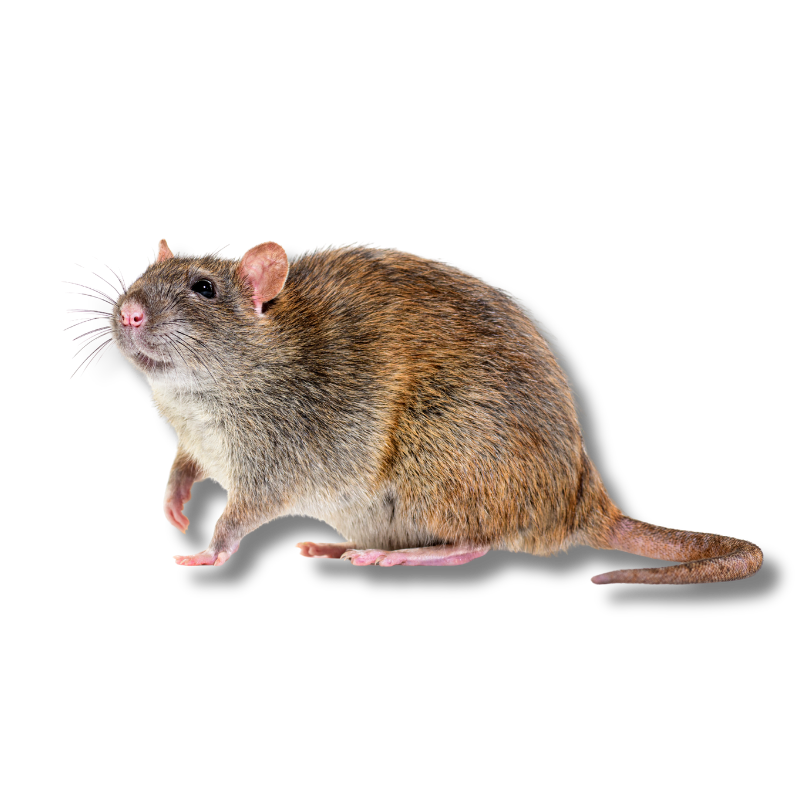

Schedule An Inspection!
Click To Contact

Roof Rats in Central Texas
The roof rat (Rattus rattus), also called the black rat, ship rat, or house rat, is one of the most common rodent species found in central Texas homes. Originally from India, these rats have spread worldwide and thrive in the warm, humid conditions that characterize much of the Austin and San Antonio region. Their name comes from their strong preference for elevated spaces – attics, rafters, and upper walls are their most common nesting sites.
In central Texas, the mild winters and abundant food sources from residential landscaping, outdoor dining, and dense tree canopy make the region especially hospitable for roof rat populations year-round. Homeowners in older neighborhoods with mature live oak canopy and homes with wood-frame construction are particularly susceptible to infestations.
Identification
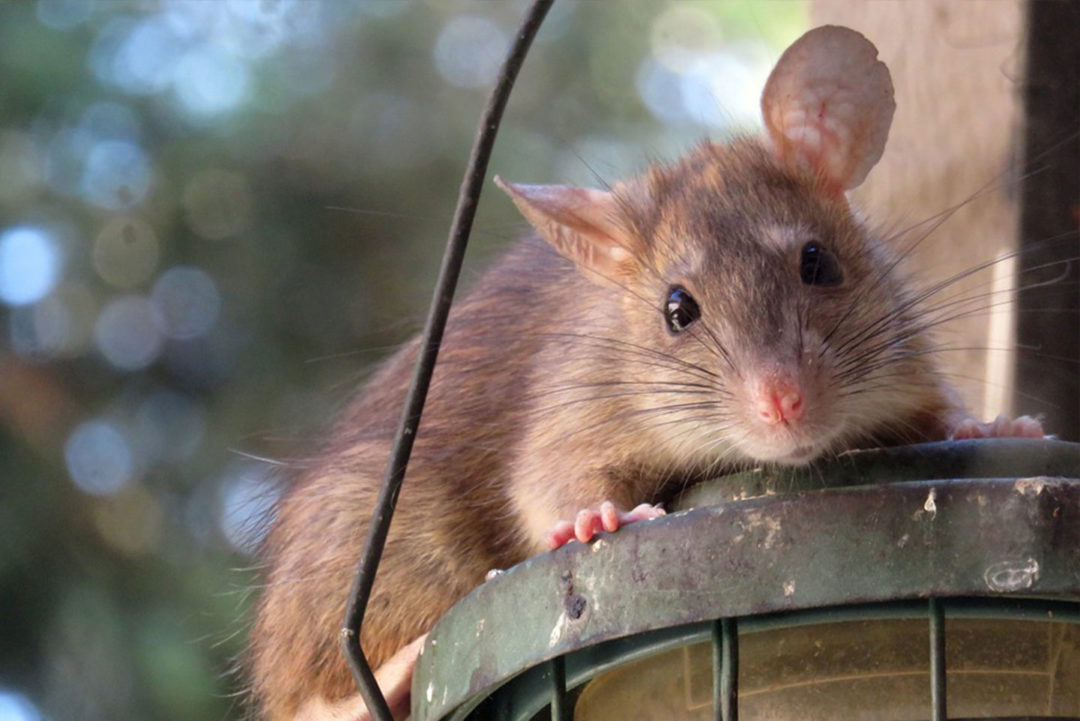
Roof rats are slender, agile rodents with a distinctive appearance that sets them apart from the more common Norway rat found in the same region. Key physical traits include:
| Feature | Roof Rat | Norway Rat (for comparison) |
|---|---|---|
| Body length | 6 to 8 inches | 7 to 9 inches |
| Tail | Longer than body, scaly | Shorter than body |
| Total length | Up to 16 inches including tail | Up to 18 inches including tail |
| Weight | 5 to 9 ounces | 7 to 18 ounces |
| Nose shape | Pointed | Blunt and rounded |
| Ears | Large, prominent | Smaller, close to head |
| Fur color | Brown to black with lighter underside | Brown or gray throughout |
| Preferred nesting zone | Attics, rafters, tree canopy | Burrows, basements, ground level |
Correct identification matters because roof rats and Norway rats require different management approaches. Roof rats are far more likely to enter a home through the roofline, eaves, and gaps around fascia boards – entry points that Norway rats rarely use.
Habits and Behavior
Roof rats are exceptional climbers. Their feet have specialized pads that allow them to grip narrow branches, vines, utility lines, and rough exterior surfaces. Their long tail provides balance at elevation. According to roof rat biology research published through the University of California Integrated Pest Management program, these rats can survive falls of up to 50 feet without injury.
In central Texas, roof rats exploit the region’s dense residential tree canopy – particularly live oaks, pecans, and cedar elms – to move between properties and gain access to rooftops. They routinely use utility lines and fence tops as travel corridors. Once they locate a gap in a roofline or soffit, they will enter and establish a nest in the attic or wall voids above insulation.
- Roof rats are nocturnal and most active between sunset and midnight.
- They typically forage within a 100 to 200 foot radius of their nest.
- Population density in a given area is closely tied to food availability – neighborhoods with fruit trees, outdoor pet food, unsecured compost, and bird feeders tend to support larger populations.
- They are cautious animals and will avoid new objects in their environment for several days, which affects trap placement strategy.
- In Austin and San Antonio, roof rats remain active year-round due to the mild winters, unlike rodent species in colder climates that reduce activity seasonally.
Diet and Foraging
Roof rats are omnivores with a preference for plant-based foods. Their diet in central Texas is strongly influenced by what is locally available, and the region’s residential landscaping provides abundant natural food sources throughout the year.
- Preferred foods include seeds, nuts (particularly pecans, which are common in central Texas), fruits, and berries.
- They readily consume pet food left outdoors – both dry kibble and wet food.
- They will eat insects including cockroaches, slugs, and snails.
- If located near water sources such as the Colorado River, Barton Creek, or neighborhood retention ponds, they may consume fish or shellfish.
- They also eat birdseed, meat scraps, grease, and compost material.
- Roof rats require approximately one ounce of water per day and will seek out pet water bowls, leaking irrigation lines, and standing water around foundations.
- They are food hoarders and will cache supplies of nuts and seeds within their nesting area.
A single roof rat can consume roughly half a pound of food per week. In households with outdoor pet feeding stations or fruit-bearing trees, this food access can sustain and grow a local population quickly.
Reproduction
Roof rats reproduce rapidly, which is why even a small initial population can escalate into a significant infestation within a few months. Central Texas’s warm climate extends their breeding season compared to northern populations.
- Females reach sexual maturity at 3 to 5 months of age.
- Gestation lasts 21 to 29 days.
- A female can produce 4 to 6 litters per year.
- Each litter contains 6 to 12 pups, with an average of 8.
- Pups open their eyes at around 15 days and are weaned by week four.
- The average lifespan of a roof rat in the wild is approximately one year.
The math on reproduction is significant. A single breeding pair can theoretically produce dozens of offspring in a calendar year, each of which becomes reproductively active within months. Early detection and intervention is far easier than addressing an established colony.
Signs of a Roof Rat Infestation
Roof rats are secretive and primarily active at night, so most homeowners do not see them directly. The following signs are more commonly noticed first:
- Droppings – Roof rat droppings are approximately three-quarters of an inch long with pointed ends. Fresh droppings are soft and moist; older ones dry out and harden. Common locations include kitchen cabinets, pantries, under sinks, along baseboards, and on top of wall beams or attic joists.
- Gnaw marks – Rats gnaw constantly to manage incisor growth. Look for chew marks on wood trim, plastic pipes, electrical conduit, and food packaging. Fresh gnaw marks are lighter in color than older ones.
- Rub marks – Roof rats travel the same routes repeatedly. Their oily fur leaves dark smear marks along walls, rafters, and pipes where they travel. These marks are often most visible where they squeeze through gaps.
- Nests – Roof rat nests are built from shredded paper, insulation, fabric, plant material, and similar soft debris. They are typically found in attic insulation, within wall voids, or in dense vegetation near the home.
- Noises – Scratching, scurrying, and squeaking sounds from the ceiling, walls, or attic – especially between sunset and midnight – are a strong indicator of roof rat activity.
- Damaged fruit – In central Texas yards with citrus, fig, peach, or persimmon trees, partially consumed fruit on the tree or ground is a common early sign.
- Pet behavior – Dogs and cats may become alert or agitated near walls, ceilings, or cabinets where rats are active behind the surface.
Health Risks and Property Damage
Roof rats are not simply a nuisance. They carry documented disease risks and cause measurable structural damage to homes.
Disease Risks
The rodent-associated disease list maintained by the Centers for Disease Control and Prevention includes several illnesses linked directly to roof rat contact, waste, or vectors the rats carry:
- Leptospirosis – Spread through rat urine contaminating water or soil. Central Texas flood events and standing water after rain events increase exposure risk.
- Hantavirus – Transmitted through contact with or inhalation of dried rat urine, droppings, or nesting material. Disturbing attic insulation in an infested home is a known exposure route.
- Salmonellosis – Caused by Salmonella bacteria spread through contaminated food or surfaces.
- Rat-bite fever – Transmitted through bites or scratches, though direct bites are uncommon.
- Murine typhus – Spread by fleas that travel on roof rats. This disease has been documented in Texas, including Bexar and Travis counties.
Property Damage
- Roof rats chew through electrical wiring, which is a documented fire hazard in residential attics.
- They damage HVAC ductwork and attic insulation, reducing energy efficiency and requiring costly replacement.
- Gnawing through plumbing lines and irrigation tubing causes water damage.
- Nesting activity compresses and contaminates blown-in insulation, which is particularly common in central Texas homes built in the 1970s through 1990s.
- Structural wood damage occurs when rats gnaw rafters, fascia boards, and framing over time.
The Texas A&M AgriLife Extension Service has documented that rodents cause significant agricultural and structural losses across Texas annually, with urban and suburban roof rat activity being a primary contributor in the central Texas region.
Prevention in Central Texas Homes
Roof rat prevention in central Texas requires addressing the specific features of local housing stock and landscaping. Many homes in Austin and San Antonio have mature trees close to the structure, pier-and-beam or slab foundations with aging soffits, and warm-season landscaping that provides cover and food.
- Trim tree branches that overhang or touch the roofline by at least four feet.
- Seal gaps around roofline penetrations, utility entry points, and soffits with hardware cloth or metal flashing. Roof rats can squeeze through a hole as small as a half-inch in diameter.
- Remove or secure outdoor food sources – bring pet food inside at night, use rodent-resistant bird feeders, and harvest fruit from trees promptly.
- Store firewood at least 18 inches off the ground and away from exterior walls. Central Texas cedar and oak firewood stacks are common harborage sites.
- Eliminate standing water sources including clogged gutters, low spots in the yard, and drip irrigation overflow areas.
- Keep garages and storage areas organized and off the floor. Overhead garage storage units used for seasonal items are frequent nesting sites.
- Inspect attic insulation annually, particularly after wet seasons, for signs of activity or nesting.
The integrated management approach to roof rat exclusion consistently shows that structural exclusion combined with habitat modification produces better long-term outcomes than trapping or baiting alone.
Roof Rat Activity by Season in Central Texas
| Season | Typical Activity Level | Key Local Factors |
|---|---|---|
| Spring (March – May) | High | Breeding season begins, fruit trees bloom, outdoor food becomes abundant |
| Summer (June – August) | High | Heat drives rats toward shaded attics and cooler interior wall voids |
| Fall (September – November) | Very High | Pecan and live oak mast production peaks; rats increase food caching and move into structures ahead of cooler temps |
| Winter (December – February) | Moderate to High | Mild central Texas winters keep rats active; attics provide warmth during cold snaps |
Unlike northern states where freezing temperatures reduce rodent activity and limit breeding cycles, central Texas roof rats remain reproductively active for most of the year. Fall is typically when infestation calls peak in the Austin and San Antonio area, coinciding with the pecan harvest season and the first seasonal cool fronts that encourage rats to move deeper into structures.
For information on rodent identification and biology relevant to the Texas region, the National Pest Management Association rodent resource guide provides additional reference material on behavior and risk factors.
If you are seeing signs of roof rat activity in your home, contact Stride Pest Control to schedule an inspection for the Austin area at (512) 777-1339 or for the San Antonio area at (210) 547-8410.
Our Certifications & Awards
Stride Pest Control holds a QualityPro certification through the NPMA's Foundation for Professional Pest Management, which means we run background checks on every employee, maintain a drug-free workplace policy, and meet 16 operational standards that exceed state and federal requirements. We also carry GreenPro certification for our reduced-risk IPM work. Every service member clears annual criminal and sexual predator screenings before entering your home, our technicians wear protective shoe covers inside every property, and we exceed state training requirements every year.
Certified Applicators and Staff Credentials
Alex Randall owns and operates Stride Pest Control in San Antonio and serves as the Responsible Certified Applicator on our Texas Department of Agriculture license. He holds Termite and General Pest Control Operator certifications from the State of Texas and the U.S. Environmental Protection Agency. A Certified Applicator holds the highest level of pest control license the state issues, covering general pest control and termite control. Raul Ramos serves as a Certified Applicator, and Gerrit Randall is a licensed technician on our San Antonio team. Stride Pest Control opened its San Antonio location in January 2020 as part of a company that has served nearly 12,000 customers across Central Texas since 2013.
Awards, Memberships, and Industry Recognition
Stride Pest Control won first place for best San Antonio pest control in the 2026 San Antonio Express-News Readers' Choice Awards. We are active members of the Texas Pest Control Association and the National Pest Management Association, and our team attended Pest World in 2023, 2024, and 2025.











Customer Testimonials


Danielle N.
Google Reviewer
Stacey L.
Google Local Guide
John N.
Google Local Guide
Stride Pest Control received an average rating of 4.9 out of 5 stars

based on 2,400+ reviews.
Ready For FastSafeReliable Pest Control?
You do not have to live with pests. Stride Pest Control offers same-day service across Central Texas with a satisfaction guarantee on every treatment.
QualityPro Certified | Satisfaction Guaranteed
Austin Pest Control
15305 Ginger St
Austin, TX 78728
(512) 777-1339
Stride Pest Control
1311 Chisholm Trail Rd Suite 404B
Round Rock, TX 78681
(512) 254-8185
Stride Pest Control
3501 Pin Oak Dr #110
San Antonio, TX 78229
(210) 547-8410