
Millipedes
Protect your home or business from millipedes in Central Texas by learning about their habits, species identification and more.

Schedule An Inspection!
Click To Contact

Millipedes in Central Texas: Identification, Behavior, and Prevention
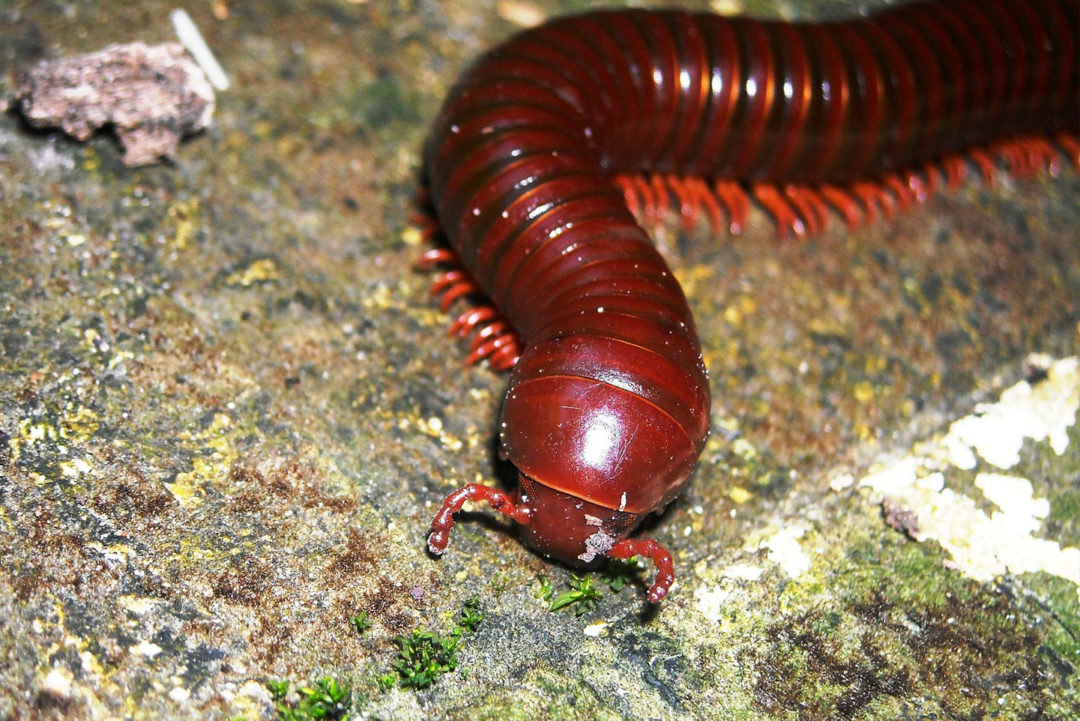
Millipedes are among the more common arthropods encountered by homeowners across central Texas, particularly during wet spring seasons when populations surge. Though they are generally harmless, large numbers indoors usually signal a moisture problem or a heavy outdoor population nearby. Understanding what millipedes are, how they behave, and what conditions attract them is the most practical starting point for keeping them out of your home.
What Are Millipedes?
Millipedes belong to the class Diplopoda within the subphylum Myriapoda. They are arthropods, not insects, and are more closely related to centipedes and crustaceans than to any insect species. Each body segment in a millipede is actually two fused single segments, which is why each segment carries two pairs of legs rather than one.
Despite the name suggesting a thousand legs, most species have between 30 and 400 legs depending on the number of segments. The record, documented in scientific literature, is over 1,300 legs found on a single specimen of a newly described species. Common North American millipedes typically fall well short of that count. Hatchlings emerge with only three pairs of legs and gain additional legs with each molt as they age.
| Characteristic | Detail |
|---|---|
| Classification | Class Diplopoda, Subphylum Myriapoda |
| Body shape | Cylindrical, segmented |
| Color | Dark brown to black (most common species) |
| Length | 0.5 inch to over 6 inches depending on species |
| Legs per segment | Two pairs |
| Legs at hatching | 3 pairs |
| Lifespan | Up to 10 years |
| Eggs per clutch | 20 to 300 |
Millipedes vs. Centipedes: How to Tell Them Apart
Millipedes and centipedes are frequently confused, but they behave very differently and pose different concerns for homeowners. The table below covers the key differences.
| Feature | Millipede | Centipede |
|---|---|---|
| Legs per segment | 2 pairs | 1 pair |
| Movement speed | Slow | Fast |
| Body shape | Cylindrical, rounded | Flattened |
| Diet | Decaying organic matter | Live insects and arthropods |
| Defense mechanism | Coils into a spiral, secretes chemicals | Can bite with venomous claws |
| Bite risk to humans | None – does not bite | Can bite, mildly painful |
Millipede Species and Habitat in Central Texas
Central Texas supports several millipede species suited to the region’s clay soils, limestone terrain, and humid riparian corridors. The North American millipede (Narceus americanus) is one of the largest species found in the state and is commonly encountered in wooded areas around the Hill Country and along creek drainages near Austin and San Antonio. Flat-backed millipedes in the order Polydesmida are also widespread across the region.
Texas millipedes thrive in conditions common to central Texas properties: decomposing leaf litter, pine straw mulch, moist soil near foundation edges, wood piles, and the shaded limestone outcroppings that characterize much of the Hill Country. Homes built on slab foundations with dense landscape plantings close to the structure are especially prone to millipede pressure during wet periods.
According to millipede management guidance from Texas A&M AgriLife Extension, populations in Texas tend to spike in spring and early fall following periods of heavy rainfall, which drives millipedes to migrate in large numbers – sometimes into structures seeking drier conditions.
Millipede Behavior and Biology
Diet and Ecological Role
Millipedes are detritivores. They feed almost exclusively on decaying plant material, fungi, and organic matter in the soil. This feeding behavior makes them beneficial decomposers in natural settings – functionally similar to earthworms in how they break down organic material and cycle nutrients. In garden settings, they rarely damage healthy plants unless conditions are extremely dry and the millipedes begin feeding on roots or seedlings to access moisture.
Movement and Sensory Ability
Millipedes move slowly and rely on touch and chemical senses rather than vision. Their simple eyes provide minimal sight. When threatened, a millipede cannot outrun a predator. Instead, it coils into a tight spiral to protect its softer underside and may secrete defensive chemicals from pores along its body.
Reproduction
Female millipedes lay between 20 and 300 eggs in the soil during spring. Eggs hatch within several weeks, and the young emerge with only three pairs of legs. They add legs and segments with each successive molt. Millipedes are unusually long-lived for invertebrates, with some individuals surviving up to 10 years. This extended lifespan, combined with large egg clutches, means that a well-established outdoor population can persist and grow over multiple seasons if conditions remain favorable.
Are Millipedes Harmful?
To Humans
Millipedes do not bite or sting. However, several species found in Texas produce defensive secretions from glands along their body segments. These secretions can contain hydrogen cyanide compounds or benzoquinones, which may cause localized skin irritation, discoloration, or an allergic reaction in sensitive individuals. The risk is low but real enough that bare-hand contact is not recommended. Wearing gloves when handling millipedes and washing hands thoroughly afterward are reasonable precautions.
To Plants and Gardens
Under normal conditions, millipedes benefit garden soil rather than harm it. They become a nuisance in gardens only when populations are very high or when drought stress causes them to target seedlings and soft-stemmed plants in search of moisture.
In the Home
Millipedes do not reproduce indoors and do not infest structural materials. They enter homes as wanderers, typically during spring migrations or after heavy rain pushes them out of saturated soil. Finding a few inside is usually just a nuisance. Finding large numbers consistently points to a substantial outdoor population living close to the structure.
Signs of a Millipede Problem
- Millipedes found along baseboards, in bathrooms, laundry rooms, or near sump pumps
- Large numbers of millipedes on exterior walls, foundation edges, or patios after rain
- Millipedes visible in mulched landscape beds directly against the home’s foundation
- Dead millipedes accumulating in window sills or along wall edges indoors
- Musty or unpleasant odor in areas where millipedes have congregated and secreted defensive chemicals
Prevention and Control in Central Texas
Moisture Reduction
Moisture management is the single most effective long-term strategy for reducing millipede pressure. Central Texas homes with poor drainage around the foundation, heavy clay soils that hold water, or irrigation systems that saturate landscape beds create ideal conditions for millipede populations to build up. Addressing these conditions reduces the habitat that sustains large numbers near your home.
- Repair leaking faucets, pipes, and irrigation heads near the foundation
- Ensure gutters and downspouts direct water away from the structure
- Reduce irrigation frequency in landscape beds adjacent to the foundation
- Fix any indoor moisture issues in bathrooms, laundry rooms, and crawl spaces
Habitat Modification
- Pull mulch back several inches from the foundation edge
- Remove leaf litter, wood piles, and debris from around the perimeter of the home
- Trim shrubs and ground cover plants away from the foundation to improve airflow and reduce moisture retention
- Relocate compost bins away from the structure
- Keep lawn and garden areas well maintained to reduce decaying organic material near the home
Exclusion
- Seal cracks and gaps along the foundation, especially where utility lines enter
- Install or repair door sweeps on exterior doors, particularly garage doors and back entries
- Caulk gaps around windows and door frames
- Check and seal gaps where the slab meets the framing or brick veneer
Managing Small Numbers Indoors
A few millipedes found inside can typically be removed by hand with gloves or vacuumed up. They will not survive long indoors because the environment is too dry for them. Disposing of the vacuum bag afterward prevents any defensive secretions from building up inside the vacuum.
The integrated pest management approach for millipedes emphasizes habitat modification and exclusion as the foundation of control, with targeted pesticide applications as a supplemental measure when populations are large.
When Professional Help Is Warranted
Recurring millipede entry, large numbers of millipedes migrating across the property, or millipedes appearing consistently in multiple rooms of the home typically indicates an established outdoor population that requires targeted perimeter treatment combined with habitat modification. DIY sprays applied indoors are largely ineffective because they address the symptom rather than the source.
For guidance on selecting a licensed pest control company and understanding what questions to ask before treatment, the U.S. Environmental Protection Agency provides a useful overview of what professional pest management should involve.
If millipedes are becoming a persistent problem in or around your central Texas home, contact Stride Pest Control for a consultation.
Our Certifications & Awards
Stride Pest Control holds QualityPro and GreenPro certifications through the NPMA's Foundation for Professional Pest Management. QualityPro represents the pest management industry's highest accreditation - often called the "Good Housekeeping Seal of Approval" for pest control - requiring background checks on all employees, drug-free workplace policies, and adherence to 16 standards that exceed state and federal requirements.
The San Antonio office operates under TPCL #827449 with Certified Applicators Alexander Randall and Raul Ramos on staff. Both hold Pest and Termite categories through the Texas Department of Agriculture. We are active members of the Texas Pest Control Association and the National Pest Management Association, with team attendance at Pest World in 2023, 2024, and 2025.
Stride maintains a BBB A+ rating for the San Antonio location with zero complaints on file.












Customer Testimonials


Danielle N.
Google Reviewer
Stacey L.
Google Local Guide
John N.
Google Local Guide
Stride Pest Control received an average rating of 4.9 out of 5 stars

based on 2,400+ reviews.
Ready For FastSafeReliable Pest Control?
You do not have to live with pests. Stride Pest Control offers same-day service across Central Texas with a satisfaction guarantee on every treatment.
QualityPro Certified | Satisfaction Guaranteed
Austin Pest Control
15305 Ginger St
Austin, TX 78728
(512) 777-1339
Stride Pest Control
1311 Chisholm Trail Rd Suite 404B
Round Rock, TX 78681
(512) 254-8185
Stride Pest Control
3501 Pin Oak Dr #110
San Antonio, TX 78229
(210) 547-8410