
Scorpion Control

Schedule An Inspection!
Click To Contact

Scorpion Extermination Services
Stride Pest Control provides scorpion control for homes and businesses across Central Texas, where the striped bark scorpion turns up in shoes, attics, and along foundations. Scorpions are hard to control on your own because they shelter deep in rock, wall voids, and cracks that store sprays never reach.
Stride treats scorpions through the Stride Forward integrated pest management process, which puts inspection and sealing ahead of product. Every treatment is backed by a same-day service option and a satisfaction guarantee, and the products we use are odorless and colorless once dry.
Scorpions hunt the insects already living around a home, so scorpion pressure rises where other pests are active. Stride also handles spider control and general pest control to cut the crickets, roaches, and spiders scorpions feed on.
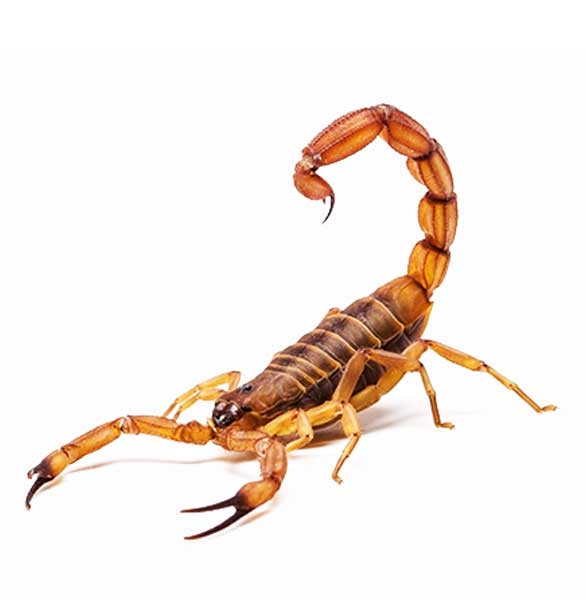
The Striped Bark Scorpion
Central Texas has one scorpion that matters for homeowners: the striped bark scorpion. The Texas A&M Field Guide to Texas scorpions lists it as the most widespread species in the state.
| Trait | Striped Bark Scorpion |
|---|---|
| Size | 2 to 3 inches, including the tail |
| Color | Pale tan with two dark stripes down the back |
| Active season | Spring through early fall; shelters in walls in winter |
| Behavior | Nocturnal; climbs walls and into attics |
| Under UV light | Glows blue-green |
| Diet | Crickets, roaches, spiders, small insects |
Because they climb, striped bark scorpions reach attics and upper floors that ground-dwelling scorpions never do. And because they glow under ultraviolet light, a night walk with a blacklight is the fastest way to find them.
Signs You Have Scorpions
A few clear signs point to scorpions around a home:
- A scorpion indoors, often near a wall, baseboard, or bathroom. One inside usually means more are nearby.
- A blue-green glow under a UV light along the foundation or in the yard at night.
- Heavy cricket, roach, or spider activity, which gives scorpions a steady food source.
- Rock beds, wood stacks, or clutter against the house, which give them daytime shelter.
Are Scorpions Dangerous?
A striped bark scorpion sting hurts, but it is rarely dangerous to a healthy adult. Scorpions do not spread disease the way mosquitoes or ticks do, so the concern is the sting itself.
The NIH MedlinePlus guide to scorpion stings notes that stings cause pain, swelling, and numbness lasting from hours to a couple of days. The risk is higher for young children, older adults, and anyone with a sting allergy, and most household stings happen when a scorpion hides in a shoe, glove, or bedding.
How We Get Rid of Scorpions
Stride treats scorpions through the five-step Stride Forward process, built around the way striped bark scorpions live and travel:
- Inspect. We walk the property, often with a UV light, to find where scorpions shelter and the gaps, weep holes, and door thresholds they use to get inside.
- Identify. We flag the conditions feeding the problem, like rock beds against the foundation or a heavy insect population.
- Recommend. We point out the door sweeps, weather stripping, and sealing that keep scorpions out, since exclusion lasts longer than product alone.
- Treat. A residual product goes along the foundation and exterior walls, a dust goes into wall voids and cracks, and interior spaces get treated only where activity shows.
- Evaluate. We monitor on recurring visits, because scorpions nest in walls and landscaping and return without ongoing pressure.
Our GreenPro certification guides this reduced-risk, inspection-first approach, and every product is pet-safe once dry.
How to Keep Scorpions Away
Keeping scorpions out comes down to removing the shelter and food that draw them in:
- Seal entry points with door sweeps and by filling cracks around pipes, cables, and the foundation.
- Move shelter away from the house, including rock beds, wood stacks, and leaf litter.
- Trim plants touching the walls, which give scorpions a bridge and hold moisture.
- Cut moisture by fixing outdoor leaks and directing downspouts away from the foundation.
- Control the insects scorpions feed on, since they follow their prey.
- Shake out shoes, gloves, and stored clothing before use.
Scorpion Control Frequently Asked Questions
Why do I see more scorpions after heavy rain?
Heavy rain floods the ground spaces scorpions shelter in, so they climb to higher, drier ground, which often means the walls and interior of a home. A wet stretch, and the dry spell right after it, are two of the most common triggers for scorpions turning up indoors in Central Texas.
Why does my newly built home have scorpions?
New construction on cleared Central Texas land disturbs the scorpions already living in the soil and rock, and they move into the nearest shelter, which is often the new house. Neighborhoods built over limestone see some of the heaviest scorpion pressure in the area.
Are baby scorpions more dangerous than adults?
Baby scorpions are not more dangerous than adults. Striped bark scorpions can sting from birth, but the popular idea that the young deliver more venom because they cannot control it is a myth. The sting is painful but rarely serious at any age.
How long can a scorpion live hidden inside my house?
A striped bark scorpion can survive for months without food, which is why one can persist in a quiet closet, attic, or wall void long after you thought the problem was gone. That staying power is a big reason scorpion control works best as ongoing service rather than a single visit.
THE STRIDE FORWARD PROGRAM
Our Strategic ECO-BASED Protocol
Stride Forward is our Integrated Pest Management program where we partner with our clients in the long-term removal and prevention of pests. Keeping your property free of unwanted insects and rodents works best when we work together.
The program combines habitat manipulation, biological control, cultural behavior changes, and the targeted use of products designed to repel or eradicate pests. Our approach follows five steps, with non-chemical methods prioritized before any product application.
Our Certifications & Awards
Stride Pest Control holds QualityPro and GreenPro certifications through the NPMA’s Foundation for Professional Pest Management, and fewer than 3% of pest control companies nationwide hold both. QualityPro requires background checks on every service member, a drug-free workplace, and 16 standards that exceed state and federal requirements.
Our Austin and Round Rock office operates under Texas Department of Agriculture license TPCL #667951, with Burton Johnston as Responsible Certified Applicator. Our San Antonio office operates under TPCL #827449, with Alex Randall as Responsible Certified Applicator. Our office manager, Michael Honeycutt, is an Associate Certified Entomologist through the Entomological Society of America.
Founded in 2013, we have served nearly 12,000 customers across Central Texas and hold a 4.9-star rating across 2,400+ reviews with an A+ from the BBB.









Customer Testimonials


Danielle N.
Google Reviewer
Stacey L.
Google Local Guide
John N.
Google Local Guide
Stride Pest Control received an average rating of 4.9 out of 5 stars

based on 2,400+ reviews.
Ready For FastSafeReliable Pest Control?
You do not have to live with pests. Stride Pest Control offers same-day service across Central Texas with a satisfaction guarantee on every treatment.
4.9 stars across 2,400+ reviews | QualityPro certified | Satisfaction guaranteed