
Eastern Subterranean Termite Control

Schedule An Inspection!
Click To Contact
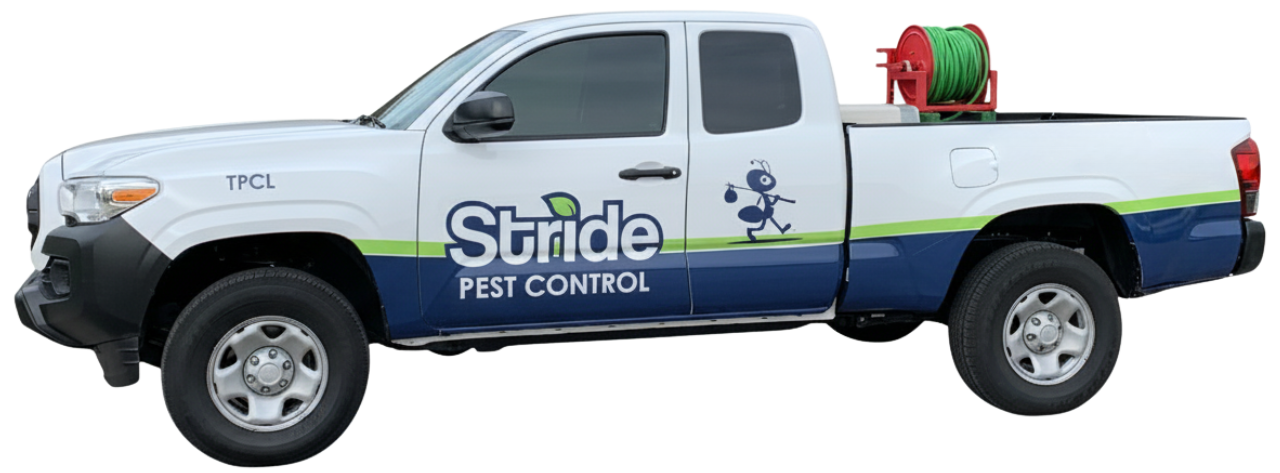
Eastern Subterranean Termite Treatment
Stride Pest Control provides eastern subterranean termite control for homes and businesses across Central Texas, where this soil-dwelling termite is the most common and most destructive termite in the region. Eastern subterranean termites are hard to stop on your own because they nest underground and reach a home’s wood through hidden mud tubes, feeding for years before any damage shows.
Stride treats eastern subterranean termites through the Stride Forward integrated pest management process, breaking the soil-to-wood path with a liquid termiticide barrier and in-ground bait stations rather than just treating what is visible.
Every treatment is backed by a same-day service option and a satisfaction guarantee. Eastern subterranean termites are one of several termites Stride treats, covered under our broader termite control and general pest control services.
Eastern Subterranean Termites In Central Texas
The eastern subterranean termite is the termite behind most of the structural damage in Central Texas, and it always reaches a home from the soil.
| Trait | Eastern Subterranean Termite |
|---|---|
| Appearance | Cream-colored workers; dark winged swarmers about a quarter inch |
| Nesting | In the soil, reaching wood through mud tubes |
| The sign they leave | Pencil-width mud tubes on foundations, piers, and walls |
| Swarms | In spring, often during the day after rain |
| What draws them | Soil moisture and wood-to-soil contact |
| The threat | The most common and most destructive termite in Central Texas |
Because they reach a home from the soil, treatment has to break that soil-to-wood path, which the Texas A&M AgriLife guide to subterranean termites explains.
Signs You Have Eastern Subterranean Termites
Subterranean termites hide their work, but a few signs give them away:
- Mud tubes the width of a pencil running up the foundation, piers, or walls.
- Discarded wings in windowsills after a spring swarm.
- Hollow-sounding or blistered wood that gives way when tapped.
- Tight-fitting doors and windows as moisture and damage warp the frames.
- Cream-colored workers in damaged wood or broken mud tubes.
Are Eastern Subterranean Termites Dangerous?
Eastern subterranean termites are not a health threat, but they are the most financially damaging pest a home can have. They feed on the cellulose in wood around the clock, working silently inside walls, floors, and support beams long before the damage is visible.
Left alone, they weaken framing, subfloors, and load-bearing wood. Termite damage is also usually excluded from homeowners insurance as a preventable maintenance issue, which is why ongoing protection matters more than a one-time fix.
How We Get Rid of Eastern Subterranean Termites
Stride treats eastern subterranean termites through the five-step Stride Forward process, aimed at the path from soil to wood:
- Inspect. We check the foundation, crawl space, and wood for mud tubes, damage, and the moisture that draws termites in.
- Identify. We confirm subterranean termites rather than drywood termites, which need a different treatment.
- Recommend. We flag the wood-to-soil contact, leaks, and drainage problems feeding the colony.
- Treat. We establish a liquid termiticide barrier in the soil and set in-ground bait stations. The barrier is non-repellent, so termites pass through it and carry it back to the colony.
- Evaluate. We monitor the stations and the structure on recurring visits, since termite pressure here is constant.
Our GreenPro certification guides this reduced-risk approach.
How to Keep Eastern Subterranean Termites Away
Keeping subterranean termites out comes down to cutting off moisture and wood-to-soil contact:
- Keep wood off the soil, holding a gap between the ground and any wood siding.
- Fix moisture from leaks, poor drainage, and downspouts against the foundation.
- Keep mulch and firewood back from the foundation and off the ground.
- Seal cracks in the foundation and around utility penetrations.
- Keep an annual inspection going, since the earliest signs are easy to miss.
Eastern Subterranean Termite Control Frequently Asked Questions
How do subterranean termites get into my house?
They come from the soil, building pencil-width mud tubes up to the wood they feed on. Wood-to-soil contact, foundation cracks, and moisture give them the path inside.
What do mud tubes mean?
Pencil-width mud tubes running from the soil up to wood are the signature of subterranean termites reaching your home. Even a tube that looks abandoned points to activity worth inspecting.
How are eastern subterranean termites treated?
With a liquid termiticide barrier in the soil plus in-ground bait stations. The barrier is non-repellent, so termites pass through it and carry it back to the colony rather than avoiding it.
Does insurance cover termite damage?
Almost always no. Insurers treat termite damage as preventable through maintenance, which is exactly why ongoing termite protection is worth more than a one-time treatment.
THE STRIDE FORWARD PROGRAM
Our Strategic ECO-BASED Protocol
Stride Forward is our Integrated Pest Management program where we partner with our clients in the long-term removal and prevention of pests. Keeping your property free of unwanted insects and rodents works best when we work together.
The program combines habitat manipulation, biological control, cultural behavior changes, and the targeted use of products designed to repel or eradicate pests. Our approach follows five steps, with non-chemical methods prioritized before any product application.
Our Certifications & Awards
Stride Pest Control holds QualityPro and GreenPro certifications through the NPMA’s Foundation for Professional Pest Management, and fewer than 3% of pest control companies nationwide hold both. QualityPro requires background checks on every service member, a drug-free workplace, and 16 standards that exceed state and federal requirements.
Our Austin and Round Rock office operates under Texas Department of Agriculture license TPCL #667951, with Burton Johnston as Responsible Certified Applicator. Our San Antonio office operates under TPCL #827449, with Alex Randall as Responsible Certified Applicator. Our office manager, Michael Honeycutt, is an Associate Certified Entomologist through the Entomological Society of America.
Founded in 2013, we have served nearly 12,000 customers across Central Texas and hold a 4.9-star rating across 2,400+ reviews with an A+ from the BBB.






Customer Testimonials


Danielle N.
Google Reviewer
Stacey L.
Google Local Guide
John N.
Google Local Guide
Stride Pest Control received an average rating of 4.9 out of 5 stars

based on 2,400+ reviews.
Ready For FastSafeReliable Pest Control?
You do not have to live with pests. Stride Pest Control offers same-day service across Central Texas with a satisfaction guarantee on every treatment.
4.9 stars across 2,400+ reviews | QualityPro certified | Satisfaction guaranteed